Home » Our Therapy & Counseling Treatment Specialties » Therapeutic Approaches » Play Therapy in Laurel Springs
Have questions, or are you ready to make an appointment? Contact us and invest in healing that lasts today:
Play Therapy offers a unique and effective approach to supporting your child’s emotional and mental well-being. At our practice, we recognize that children often communicate their feelings and experiences through play rather than words. That’s why Play Therapy is such a powerful tool—it allows children to express themselves naturally and safely. Whether you’re searching for a “play therapist near me” or exploring different therapeutic options, our experienced team is dedicated to helping your child navigate their challenges through the language of play.
Our practice, located in Laurel Springs, NJ, is committed to creating a nurturing environment where children feel understood and supported. We understand parents’ concerns when seeking therapy for their children, and our goal is to provide a service that meets and exceeds your expectations. From the moment you step into our office, you’ll find a team of professionals ready to assist you and your child in this journey toward healing and growth.
In the following sections, we’ll explore Play Therapy, how it works, and the many benefits it can offer your child. By understanding the basics and seeing how this approach can positively impact your child’s life, you can decide whether Play Therapy is the right fit for your family.
Play Therapy is a therapeutic approach designed to help children express their emotions, resolve conflicts, and develop coping strategies through the natural medium of play. Unlike traditional therapy, which relies heavily on verbal communication, Play Therapy allows children to use toys, games, and creative activities as their communication tools. This method is especially effective for young children who may not have the verbal skills to articulate their thoughts and feelings.
In a Play Therapy session, the therapist creates a safe, structured environment where children can freely explore their emotions. The playroom is equipped with carefully selected toys and materials that encourage self-expression and problem-solving. As children engage in play, the therapist observes their behavior, identifies underlying issues, and guides the therapeutic process to help them work through their challenges.
The key to Play Therapy lies in its ability to meet children at their developmental level. Therapists can use play as a medium to gain insights into a child’s inner world that might not be accessible through conversation alone. This approach is particularly beneficial for children dealing with anxiety, trauma, or behavioral issues, as it allows them to express themselves in a non-threatening way.
As you consider therapy options for your child, it’s essential to understand that Play Therapy is not just about play—it’s a structured, evidence-based approach that can lead to meaningful changes in your child’s emotional and behavioral health. With the support of a skilled play therapist, your child can learn to navigate their emotions more effectively, build resilience, and develop healthier ways of interacting with the world around them.
Play Therapy offers a wide range of benefits that can have a lasting impact on your child’s development. One of the primary advantages of Play Therapy is its ability to help children express emotions that they might find difficult to communicate verbally. Through play, children can explore complex feelings, work through trauma, and develop a sense of mastery over their experiences. This exploration can lead to significant improvements in their emotional well-being.
In addition to emotional benefits, Play Therapy also supports behavioral change. Children who engage in Play Therapy often exhibit better self-regulation, improved social skills, and enhanced problem-solving abilities. These skills are essential for navigating the challenges of everyday life. They can lead to better outcomes both at home and in school. The non-directive nature of Play Therapy allows children to take the lead, fostering a sense of autonomy and confidence that can be empowering.
Another critical aspect of Play Therapy is its ability to strengthen the parent-child relationship. Therapists work with children and collaborate with parents to provide insights into their child’s behavior and emotional needs. This partnership can be incredibly valuable, offering parents the tools and understanding needed to support their child outside of therapy sessions. By reinforcing the strategies learned in therapy at home, parents can help ensure that the positive changes continue long after the sessions have ended.
At our practice, Play Therapy is not just a treatment but a journey towards healing and growth. If you’re searching for therapy options that can make a real difference in your child’s life, Play Therapy offers a compassionate and effective solution. Our experienced play therapists are here to guide your child through this process, helping them to overcome challenges and thrive in their development.
As we delve deeper into how Play Therapy works and explore the different approaches available, you’ll better understand why this method is so beneficial for children. Whether you’re new to the concept or have been considering it for some time, we’re here to support you every step of the way.
Understanding how Play Therapy works can help you feel more confident and informed about the process as a parent. Play Therapy sessions create a space where children can express themselves freely through play while the therapist observes and guides their actions to uncover underlying issues. This therapeutic environment is safe and empowering for children, allowing them to take control of their healing process in a way that feels natural to them.
A typical Play Therapy session begins with your child entering a playroom with various toys, games, and art supplies. These tools are carefully selected to facilitate self-expression and emotional exploration. As your child engages with these materials, the therapist observes their choices, behaviors, and interactions. For example, a child dealing with anxiety might choose to play out scenarios involving fear or control, providing the therapist with valuable insights into their emotional state.
The therapist’s role during Play Therapy is both observational and participatory. While children lead the play, the therapist may gently intervene to help guide the session when necessary. This intervention could involve asking questions, introducing new elements into the play, or providing a safe space for the child to express complex emotions. The goal is to help your child explore their feelings and experiences in a way that promotes healing and growth.
The process is tailored to your child’s needs, making each session unique. Over time, patterns may emerge in how your child engages with play, allowing the therapist to develop a deeper understanding of their emotional and psychological landscape. This understanding is key to helping your child work through their challenges, whether they are dealing with anxiety, trauma, or other emotional difficulties.
As a parent, you play an integral role in the therapy process. Our therapists collaborate closely with you, providing feedback and guidance on how to support your child at home. By understanding the themes and behaviors that emerge in therapy, you can reinforce positive change and help your child continue to grow. Play Therapy is not just a standalone treatment—it’s a partnership between therapist, child, and parent, all working together to ensure your child’s well-being.
Play Therapy is not a one-size-fits-all approach. There are several different types of Play Therapy, each tailored to meet the unique needs of children depending on their emotional and psychological challenges. Understanding these approaches can help you feel more informed about available options and give you confidence in choosing the proper method for your child.
One common approach is Non-Directive Play Therapy, also known as child-centered play therapy. In this method, children are given the freedom to direct the play session. The therapist provides minimal intervention, allowing the child to explore their feelings and express themselves without guidance. This approach is highly effective for children who may feel anxious or overwhelmed by more structured forms of therapy. It gives them the autonomy to control the pace and direction of the treatment, which can be empowering and healing.
Another widely used method is Directive Play Therapy, where the therapist takes a more active role in guiding the session. This approach may be used when children are struggling to express complex emotions or are dealing with specific issues such as trauma or behavioral concerns. The therapist may introduce particular toys, games, or activities to help the child work through their challenges. For instance, therapeutic games may be used to address issues like anxiety or conflict resolution, giving the child a structured environment in which to explore these topics.
Synergetic Play Therapy is another innovative approach, blending play therapy with neuroscience and attachment theory principles. In this method, therapists focus on helping children regulate their nervous system responses and connect with their emotions. The goal is to create a synergy between the child and therapist, fostering a deep sense of safety and connection. This approach can be particularly beneficial for children who have experienced trauma or attachment difficulties, as it promotes emotional healing on a deeper level.
At our practice, we tailor the Play Therapy approach to meet each child’s individual needs. Whether your child benefits from a non-directive, directive, or synergetic approach, our therapists are trained in various methods to ensure your child receives the most effective care. We believe in a flexible, child-centered approach that honors the uniqueness of each child’s situation and emotional needs.
As you explore your therapy options, remember that the right approach can make all the difference in your child’s healing journey. We’re here to guide you through the process, ensuring your child receives the care and support they need to thrive. In the following section, we’ll discuss why our play therapists are a trusted alternative to other credentialed providers in the field.
Choosing the right therapist for your child is crucial, and we understand that you want a professional you can trust. Our play therapists are highly trained and deeply committed to helping children navigate their emotional and behavioral challenges. While many credentialed providers are in the field, our approach sets us apart by combining expertise, compassion, and a personalized touch that makes a real difference for families.
Our therapists have undergone extensive training in Play Therapy techniques that ensure they are equipped to handle a wide range of emotional and behavioral issues. Whether your child is dealing with anxiety, trauma, or behavioral challenges, our therapists are skilled at adapting their methods to meet each child’s unique needs. We use evidence-based practices, ensuring that your child receives care that is both effective and compassionate.
But expertise is just one piece of the puzzle. What truly sets our therapists apart is their ability to connect with children on a deeper level. Play Therapy is not just about the techniques used—it’s about creating a relationship built on trust and understanding. Our therapists work hard to establish this connection, ensuring each child feels safe, heard, and supported throughout the therapeutic process. This sense of safety is critical for children, especially those who may be hesitant or nervous about therapy.
We also take pride in the collaborative nature of our practice. While we are experts in Play Therapy, we believe parents are experts in their children. That’s why we work closely with you throughout the therapy process, offering guidance, support, and feedback to help reinforce what your child is learning. This collaborative approach allows for a more holistic form of care, ensuring that your child is supported in the therapy room, at home, and in their everyday life.
Finally, our therapists are dedicated to ongoing professional development. The field of Play Therapy is constantly evolving, with new techniques and approaches being developed to meet the needs of today’s children. Our team stays up to date with these advancements, continually refining their skills and expanding their knowledge to provide the best possible care for your child.
In the next section, you’ll meet our therapists and learn more about their experience and dedication to helping your child thrive through Play Therapy. We believe in offering a personalized, family-centered approach, and we’re confident that our team can provide the support your family needs.
At the heart of our Play Therapy practice are our dedicated and experienced therapists, who are passionate about helping children grow and thrive. Each of our play therapists brings a unique set of skills and experiences, but they all share a deep commitment to providing compassionate, personalized care. When you choose our practice, you’re not just selecting a therapy service—you’re gaining a partner in your child’s well-being.
Our therapists are extensively trained in various Play Therapy techniques, ensuring they can address a wide range of emotional, behavioral, and developmental challenges. From anxiety and depression to trauma and behavioral issues, our therapists are equipped to help your child work through their difficulties in a supportive and nurturing environment.
What truly sets our therapists apart is their personal ability to connect with children. Children respond best to therapy when they feel safe, understood, and empowered. That’s why our therapists focus on building trust from the very first session. They take the time to get to know each child, creating a therapeutic relationship that fosters openness and healing. This connection is the foundation upon which all successful therapy is built, and it’s one of the most important aspects of the work we do.
Our therapists also understand that every child’s journey is unique. That’s why they approach each case flexibly and creatively, adjusting their methods to suit the child’s needs and progress. Whether your child needs a more structured approach or thrives in a less directive environment, our therapists are skilled in adapting their techniques to ensure the best outcomes. They are dedicated to helping children find their voice, process their emotions, and develop the tools they need to succeed in therapy and life.
As part of our commitment to your family’s success, we offer regular communication and feedback sessions with parents. This communication lets you stay informed about your child’s progress, understand the themes emerging in therapy, and learn how to support your child’s growth at home. Our therapists believe in creating a collaborative environment where parents and therapists work together to ensure the best possible outcomes for the child.
In the next section, we’ll explore how play therapy counseling can benefit your child and your entire family, creating positive changes that extend far beyond the therapy room. We’re here to help you and your child thrive—together.
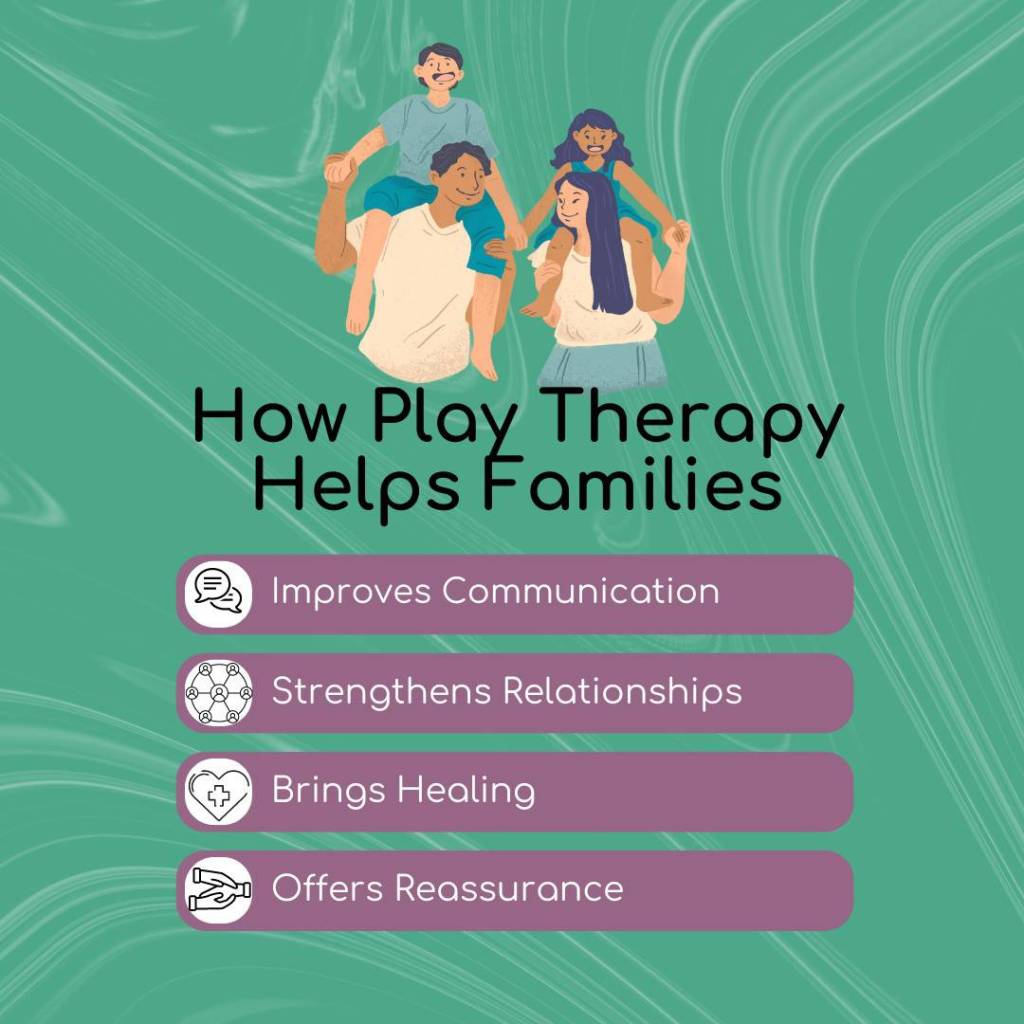
Play Therapy benefits your child and can profoundly impact your entire family. When a child struggles with emotional or behavioral issues, it can affect the family dynamic in ways that are often difficult to manage. Play Therapy offers a path toward healing for the child and the family as a whole, fostering healthier relationships, better communication, and a more peaceful home environment.
One of the most immediate ways Play Therapy can help your family is by improving communication. Children often struggle to express their feelings, leading to misunderstandings, frustration, or conflict at home. Through Play Therapy, children learn to express their emotions safely and constructively. As they develop these skills, parents often notice a marked improvement in their child’s ability to communicate more openly and effectively. This can reduce tension and create a more harmonious family environment.
Another important benefit of Play Therapy is how it strengthens the parent-child relationship. As your child works through their challenges in therapy, you’ll gain valuable insights into their emotional world. This deeper understanding can help you respond to their needs with greater empathy and patience. Our therapists often work closely with parents, offering feedback and strategies for reinforcing positive changes during therapy. By partnering with you, we help ensure that the progress made in the therapy room continues at home.
Play Therapy also allows the entire family to heal from the ripple effects of a child’s emotional struggles. When one family member faces challenges, it can create stress for everyone involved. Play Therapy helps to address the root causes of a child’s distress, leading to positive behavioral changes that benefit the entire family. Whether your child is dealing with anxiety, behavioral issues, or the effects of trauma, the improvements they make in therapy can lead to a more balanced and supportive home life for everyone.
Moreover, Play Therapy offers hope and reassurance for parents. Seeing your child struggle can be a challenging experience, and it’s natural to feel overwhelmed at times. Through Play Therapy, you’ll see your child develop resilience, emotional regulation, and coping skills. Knowing your child is on a path toward healing and growth, these improvements can provide relief. With our therapists guiding your child and your family, you can feel confident that you’re taking positive steps toward a healthier, happier future.
In the next section, we’ll address some frequently asked questions about Play Therapy and provide you with more information on how this approach works and what you can expect as a parent. We’re here to support your family every step of the way.
As you consider Play Therapy for your child, it’s natural to have questions about how the process works, what to expect, and how it can benefit your family. To help you make an informed decision, we’ve compiled answers to some of the most commonly asked questions from parents who, like you, seek the best care for their child.
Play Therapy is primarily designed for children between the ages of 3 and 12. However, it can also be adapted for older children and even teenagers. Since younger children often lack the verbal skills to express their emotions, Play Therapy provides them with a medium they are comfortable with—play. This allows them to explore their feelings, process experiences, and develop coping strategies in a way that feels safe and natural.
The duration of Play Therapy varies depending on the child’s needs and the issues being addressed. Some children may benefit from short-term therapy, which could last a few months, while others may require more extended support. Typically, Play Therapy sessions are held once a week, and progress is reviewed regularly to ensure that the child is benefiting from the approach. Our therapists will work closely with you to determine the best course of action for your child.
As a parent, your involvement is crucial to your child’s success in Play Therapy. While the sessions focus on your child’s experience, our therapists will inform you about your child’s progress and provide strategies for reinforcing positive changes at home. You can create a supportive environment that complements the therapeutic work by maintaining open communication with your child’s therapist and applying the tools and techniques they suggest.
Play Therapy can be effective for a wide range of emotional, behavioral, and psychological challenges. Common issues addressed through Play Therapy include anxiety, depression, trauma, grief, behavioral problems, and developmental delays. Additionally, Play Therapy can help children who are adjusting to significant life changes, such as divorce, relocation, or the loss of a loved one. Our therapists tailor the approach to suit the unique needs of each child, ensuring that the therapy is both relevant and effective.
While both Play Therapy and Behavioral Therapy aim to help children overcome emotional and behavioral challenges, they use different methods. Play Therapy allows children to express themselves and process their emotions through play, which is more indirect and child-led. Conversely, behavioral therapy focuses on identifying and changing specific behaviors through techniques like reinforcement, rewards, and consequences. Both approaches can be effective, but Play Therapy is especially beneficial for younger children who cannot verbalize their emotions as easily.
Yes, Play Therapy can be a helpful tool for children with ADHD. While it may not directly address the symptoms of ADHD in the same way that Behavioral Therapy or medication might, Play Therapy can help children with ADHD develop better emotional regulation, improve their social skills, and learn coping strategies for managing frustration or impulsivity. Our therapists can integrate elements of Play Therapy with other therapeutic approaches to create a comprehensive treatment plan tailored to your child’s specific needs.
Progress in Play Therapy can be seen in various ways, both in and outside the therapy room. Over time, you may notice improvements in your child’s ability to regulate their emotions, communicate more openly, and exhibit fewer behavioral problems. Our therapists will provide regular feedback on your child’s progress and make any necessary adjustments to the treatment plan. While every child’s journey is unique, we work closely with parents to ensure that the therapy is helping your child thrive.
If you have more specific questions about Play Therapy or want to learn how it could benefit your child, don’t hesitate to contact us. In the next section, we’ll guide you through the process of getting started with Play Therapy and taking the first step toward supporting your child’s well-being.
If you believe Play Therapy could be the right fit for your child,
Whether your child is facing anxiety, trauma, social difficulties, or other challenges, our team is committed to helping them thrive emotionally and behaviorally. We understand that every child’s journey is different, and we work closely with families to ensure that the therapy process aligns with your child’s individual needs and goals.
Contact us today to learn more about our practice and how Play Therapy can benefit your child, or schedule an appointment to get started. Together, we can create a path toward healing, growth, and a brighter future for your child.
Your search for a trusted and experienced play therapist ends here.
If you want to see if Play Therapy can help your child, please click here to book a therapy appointment with a See You Through It Counseling therapist. You can also set up an appointment, phone consult, or ask questions by calling 856-335-1352 or emailing us at info@SYTICounseling.com.
To learn more about the treatment services See You Through It Counseling provides, check out our treatment specialties.
To learn more about Play Therapy, check out the following resource: